
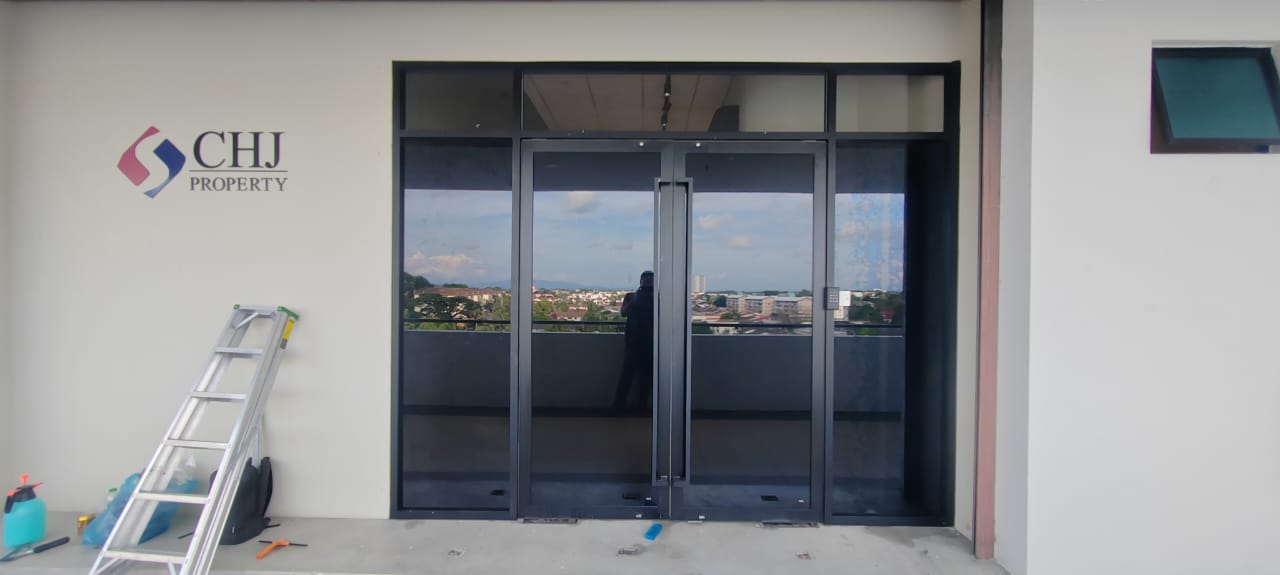
What is Tinted Glass?
Tinted glass is flat glass (usually float glass) that has been treated with a colorant or coated with a film to reduce the transmission of sunlight, specifically visible light, infrared radiation (heat), and ultraviolet (UV) rays. It’s like giving the glass a pair of permanent sunglasses.
Visual Appearance
The most immediate description of tinted glass relates to its color and light-altering effects:
-
Uniform Color: Unlike a coating that sits on the surface, body-tinted glass has a consistent, integral color throughout its entire thickness. Common colors include:
-
Soothe (Gray): A neutral, modern look that reduces brightness and glare without significantly altering the perceived color of objects viewed through it.
-
Earth (Bronze/Copper): A warm, classic tone that adds a sense of luxury and significantly cuts glare and heat.
-
Forest (Green): Offers a cool, natural aesthetic, often associated with eco-friendly buildings. It provides good solar control.
-
Sky (Blue): A contemporary, crisp color that creates a sleek, high-tech appearance and offers excellent glare reduction.
-
-
Reduced Transparency: Tinted glass is less clear than standard clear glass. It makes views appear darker and more subdued, like looking through a faintly colored filter.
-
Reflective Quality (at night): From the outside, during the day, tinted glass often looks like a darker version of its color. However, at night with lights on inside, the effect reverses, and the glass can appear more transparent from the outside while looking like a mirror from the inside.
-
Depth and Richness: Especially with thicker glass, the color has a tangible depth, making the glass itself a visual feature of the building or vehicle, not just a transparent barrier.
How It’s Made (Two Main Methods)
-
Body-Tinted (or Integral Tint): Metal oxides (like iron, cobalt, selenium, or nickel) are added to the molten glass during manufacturing. The entire sheet of glass is colored all the way through. This is the most durable method.
-
Surface-Coated (Tinted Film): A thin, transparent polyester film with a dye or metallic particles is applied to an existing pane of clear glass. This is a more affordable and reversible retrofit option.
Key Properties & Performance
Beyond its appearance, tinted glass is defined by what it does:
-
Solar Control: It significantly reduces Solar Heat Gain Coefficient (SHGC), meaning less heat from the sun enters a space. This lowers air conditioning costs.
-
Glare Reduction: It cuts down the brightness of direct and reflected sunlight, making it more comfortable for computer screens, driving, and general living.
-
UV Protection: It blocks a substantial percentage (often 99%) of harmful ultraviolet rays, protecting furniture, artwork, and car interiors from fading.
-
Privacy: During the daytime, the darkened appearance makes it harder to see clearly into a building or vehicle from the outside, offering “one-way” privacy (the inside can see out, but the outside sees a dark reflection).
-
Safety & Security (for film): Tinted safety film can help hold shattered glass together in case of an impact or explosion.
-
Reduced Visible Light Transmission (VLT%): This is a key metric. A standard clear glass might have 85-90% VLT (lets 90% of light through). A dark automotive tint might have only 5% VLT (“limo tint”). Architectural tinted glass typically ranges from 14% to 50% VLT.
Common Applications
-
Architecture (Commercial & Residential): Office building curtain walls, storefronts, skylights, residential windows (especially in hot climates), and sliding doors.
-
Automotive: Car side and rear windows (regulated by law in most places). The windshield typically only has a tinted band at the top.
-
Aerospace: Airplane cabin windows (often a deep blue or green).
-
Consumer Goods: Picture frames, glass shelves, decorative tabletops, and beverage bottles (e.g., brown beer bottles, green wine bottles).
 Malay
Malay  English